Naples from below: 2,400 years of tunnels

Covers Naples' museums, churches, castles, underground sites and walks, with tickets and hours checked against the official pages on the date shown.
UpdatedThis page carries dated prices or seasonal dates checked on the date above, and that window has now passed. Re-check the sources at the foot of the page before you book anything.
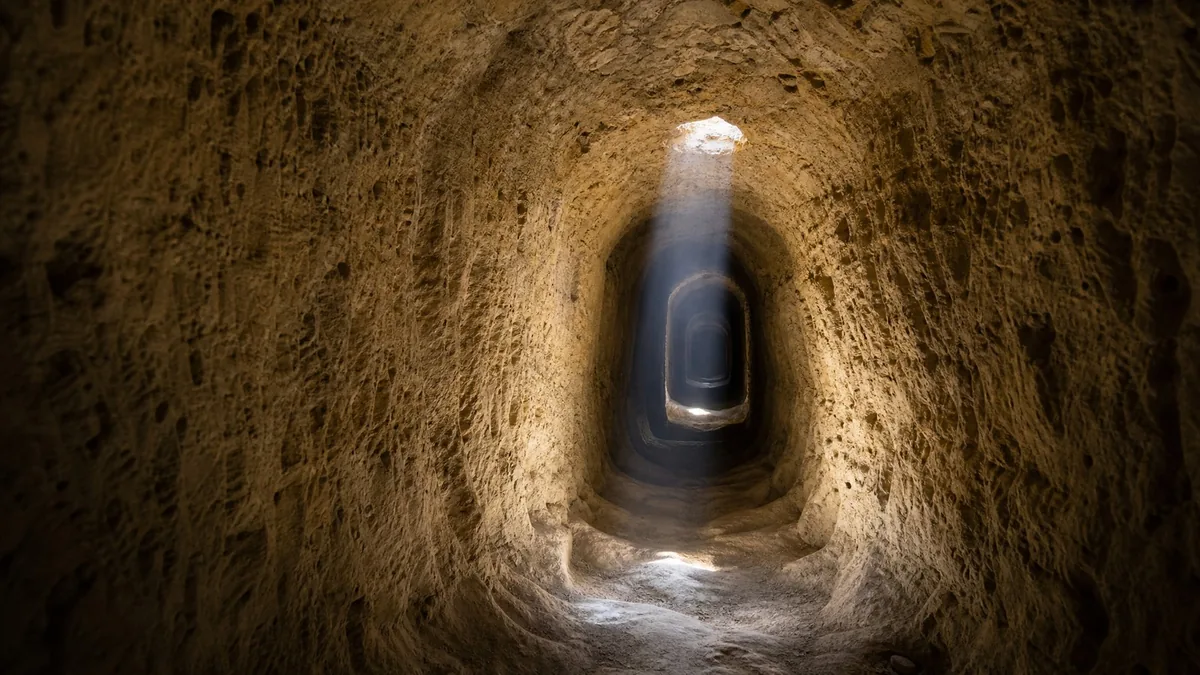
Naples stands on tuff, a soft volcanic stone. For 2,400 years the city has quarried it from under its own streets, then reused the holes: as water cisterns, as tombs, as a royal escape route and, in the Second World War, as shelters from the bombs. Much of it is still there, under the Centro Storico and the hills around it.
Four places let you in, each run by a different operator with different rules. Napoli Sotterranea costs €18 and runs daily. The Galleria Borbonica costs €15 to €20 and opens only Friday to Sunday. The Catacombs of San Gennaro cost €13 and the Fontanelle Cemetery from €6, and both are closed on Wednesdays. Here is the history in order, and which one fits your trip.
At a glance
- The rock
- Tuff, a soft volcanic stone. For centuries the city was built with what it dug out from beneath itself.
- Greek
- Quarries and cisterns from the 4th century BC; the Bolla aqueduct, about 10 km (6 miles) long.
- Roman
- The Serino aqueduct, about 100 km, built around 30 to 20 BC; a theater later swallowed by houses.
- Bourbon
- A 431 m tunnel under Monte Echia, dug by hand from 1853 to 1855 for King Ferdinand II.
- 20th century
- Cisterns turned into air-raid shelters in the Second World War; wells filled with rubble afterward.
- Visit today
- Napoli Sotterranea €18 daily; Galleria Borbonica from €15, Friday to Sunday; Catacombs of San Gennaro €13; Fontanelle from €6.
In this guide
Greek and Roman: stone out, water in
The Greek city of Neapolis cut its building stone from below. Napoli Sotterranea dates the cavities under Piazza San Gaetano to the 4th century BC, and says they supplied the city's water for about 23 centuries. The Hydria project, which studies ancient water systems, credits the Greek city with the Bolla aqueduct, about 10 km long, and the Romans with the far larger Serino aqueduct, about 100 km, built around 30 to 20 BC.
The pattern repeated for centuries: stone came up to build the city, and the hollows below were used to store water from the aqueduct channels. The city also built over its own past. The Greco-Roman theater of Neapolis vanished into the houses on Via Anticaglia: from the 15th century, homes were built into its curved walls. Napoli Sotterranea's ticket includes a visit through one of them, where a guide moves a bed and opens a trapdoor. The operator says the rooms below were Nero's dressing rooms; treat that as a story, not history.
The Christian dead: catacombs and a quarry of bones
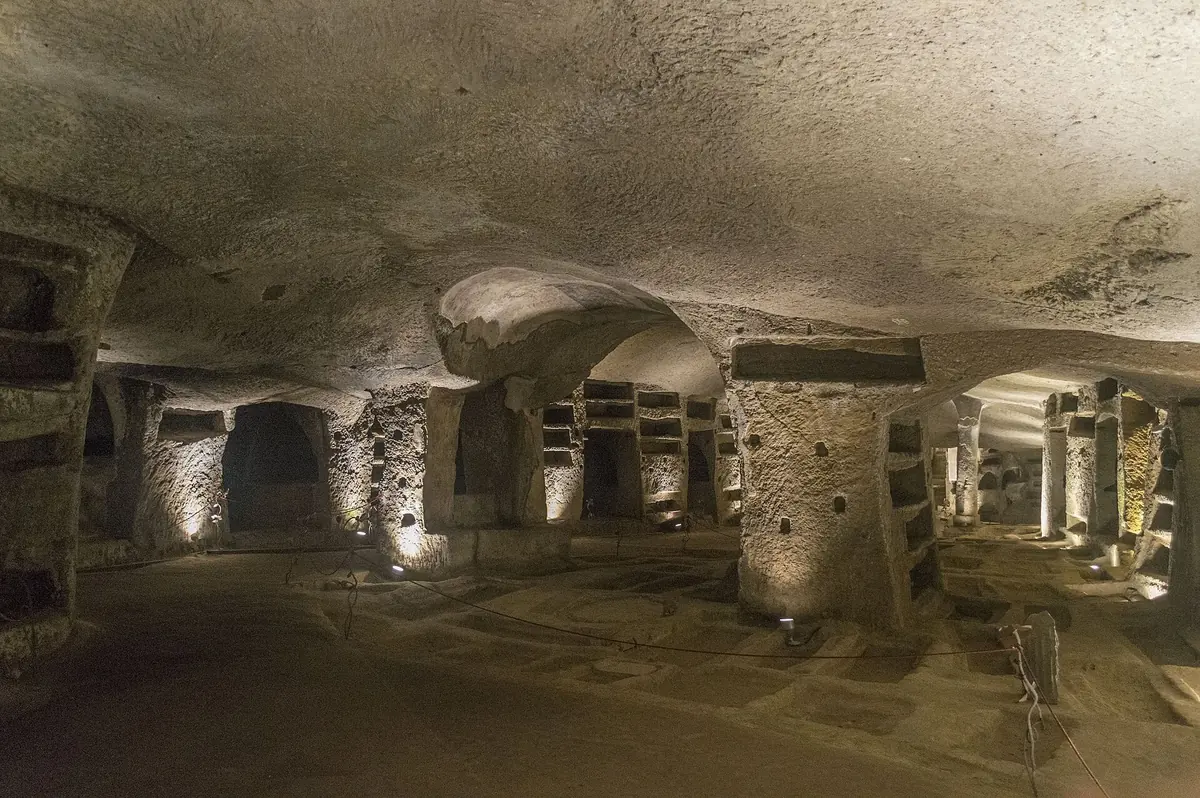
Outside the Greek walls, the same stone took the dead. The Catacombs of San Gennaro, cut into the tuff of the Capodimonte hill, began as a family burial ground in the 2nd century AD and grew after the burial of the bishop Agrippinus in the 4th. Their galleries are wider and higher than the famous catacombs of Rome. The €13 ticket also covers San Gaudioso, under the Basilica of Santa Maria della Sanità, within 12 months.
Further up the valley, the old quarries of the Fontanelle became an ossuary. The Comune's history links it to the plague of 1656 and to the cholera dead of 1837, and in 1872 a parish priest and local women put the bones in the order you see now. It reopened on April 19, 2026, after years shut, and every visit must be booked. Our Rione Sanità walk links both.
1629 to 1885: the pozzari and the end of the wells
In 1629 Cesare Carmignano built a new aqueduct for the growing city. Keeping the water system working was the job of the pozzari, the aqueduct's maintenance men, who moved through narrow channels under the city. You can walk some of those channels on the Galleria Borbonica's Adventure route.
The system ended with a disaster. A cholera epidemic hit Naples in 1884, and on January 15, 1885 a national law funded the Risanamento, the rebuilding of the city's worst districts and its sewers. A modern pressure aqueduct, begun in 1881, replaced the old supply, and the cisterns lost their purpose.
1853: the king's tunnel
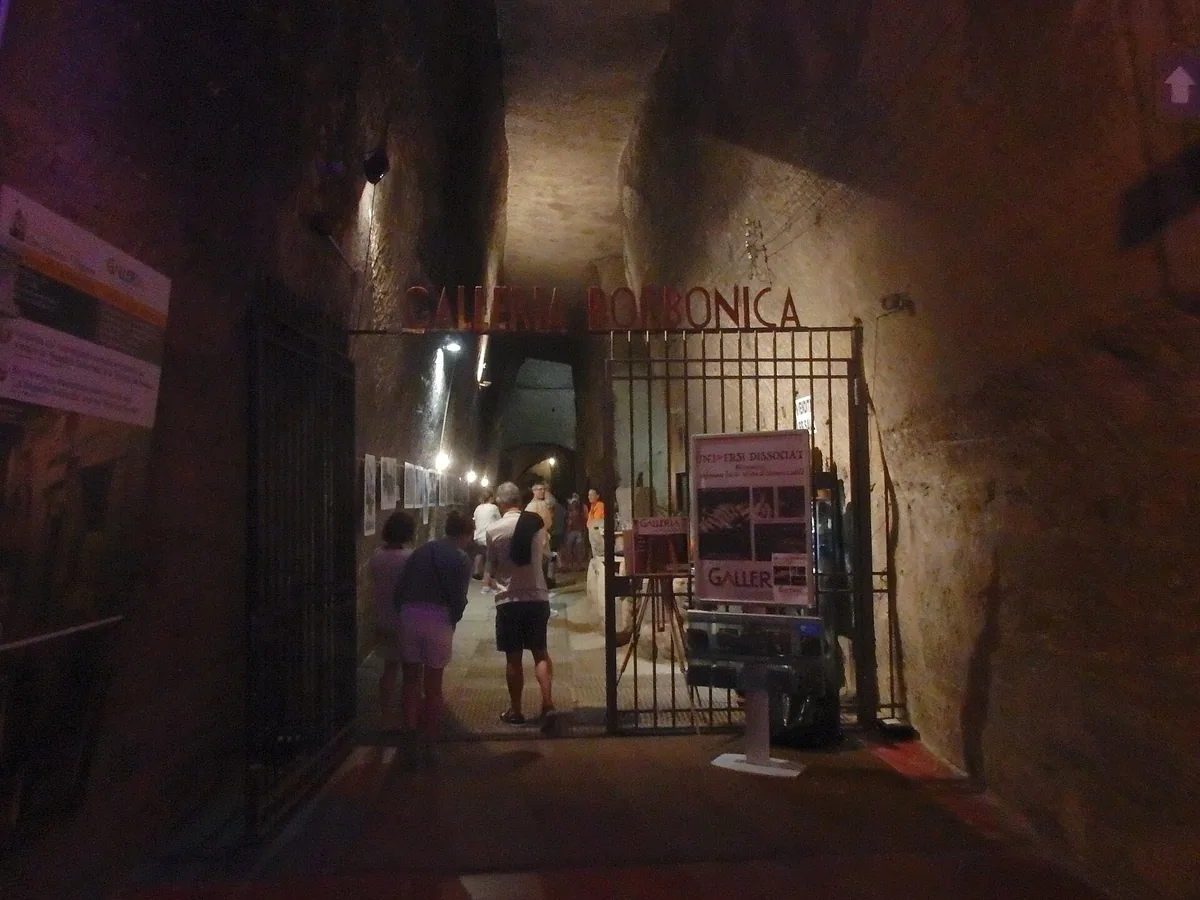
On February 19, 1853, King Ferdinand II signed a decree for a tunnel under Monte Echia, linking the Royal Palace with the barracks near the sea: a route for troops, and an escape for the royal family after the uprisings of 1848. The architect Errico Alvino's workers dug it by hand, by torchlight, from April 1853 to May 1855. They kept breaking into the older cisterns and had to bridge them. The tunnel ended 431 m long, at Piazza Carolina behind Piazza del Plebiscito, and never reached the Palazzo Reale.
1940 to 1945: shelters, then rubble
In the Second World War the empty cisterns became air-raid shelters. The Galleria Borbonica says 5,000 to 10,000 people sheltered in its tunnel between 1939 and 1945; Napoli Sotterranea says about 40,000 people lived in the city's underground during the raids. Those are the operators' own figures, and we found no independent count. Napoli Sotterranea's war museum dates the raid that all but destroyed Santa Chiara to August 4, 1943; the rebuilt basilica tells that story above ground.
After the war, the underground became a dump. Napoli Sotterranea says rubble from the bombed city was thrown back down the old wells, and the Galleria Borbonica served as a police car pound until 1970. Excavation from 2007 uncovered cars, motorbikes and statues under 8 m of debris; the Adventure route is the one that promises the room of vintage vehicles.
The digging has not stopped. Toledo station on metro Line 1, opened in 2012, goes down about 44 m, for the price of a €1.30 ticket.
Which underground to visit
| Site | Price | Days | Best for |
|---|---|---|---|
| Napoli Sotterranea, Piazza San Gaetano 68 | €18 | Daily, hourly 10 a.m.–6 p.m. | Greek cisterns and the Roman theater; no booking for small groups |
| Galleria Borbonica, Vico del Grottone 4 | €15; Adventure €20 | Friday to Sunday and holidays | The Bourbon tunnel and the wartime cars; booking required |
| Catacombs of San Gennaro, Via Capodimonte 13 | €13 | Closed Wednesdays | Early Christian tombs and mosaics, guided |
| Fontanelle Cemetery, Via Fontanelle 80 | From €6 | Closed Wednesdays | The skull cult; booking always required |
If you do one, do Napoli Sotterranea: it is central, open every day and covers the longest span of history. It involves 136 steps down to about 40 m and back, with no lift. Our Sotterranea or Borbonica comparison goes into detail. A MANN ticket gives 25% off at the Galleria Borbonica and the catacombs.
Tickets and tours you can book

Naples: Naples Underground Entry Ticket and Guided Tour
€18, the same as the full price on napolisotterranea.org. Guided only; 121 steps and not wheelchair accessible. Meets at Piazza San Gaetano 62, while the association's site gives its entrance as number 69; neither page says the two sellers are the same.
Rating as shown on GetYourGuide
Naples: Catacombs of San Gennaro Entry Ticket & Guided Tour
Sold by the catacombs' own operator, Catacombe di Napoli. Timed and non-refundable: be at the ticket office, Via Capodimonte 13, 15 minutes early. The San Gaudioso part is valid for 12 months.
Rating as shown on GetYourGuide
Galleria Borbonica Entrance Ticket in Standard Route
Same €15 as the Galleria's own adult price. Entries at 10 am, noon, 3 pm and 5 pm from Vico del Grottone 4. The listing's child prices differ from the Galleria's own page, so check before booking children.
Rating as shown on Viator
Booking through these links supports this site at no cost to you. Prices move by date, so we do not print them here; the official prices we checked are in the page above.
Frequently asked questions
Why is there a city under Naples?
Because Naples was built from the stone beneath it. From the Greek period, builders quarried tuff from shafts under their houses, and the cavities became cisterns fed by aqueducts. Later they served as tombs, a royal tunnel and wartime shelters.
Is Napoli Sotterranea worth it?
Yes, for most visitors. At €18 it runs every day in English and Italian, needs no booking for small groups, and includes the Roman theater under a family home. Skip it if you cannot manage 136 steps each way.
Which Naples underground tour is best for claustrophobia?
The Catacombs of San Gennaro, whose galleries are wide and high. At Napoli Sotterranea the main rooms are large and only one candlelit passage is tight; it is optional, and you wait about 10 minutes while the group goes through. Avoid the Galleria Borbonica's Speleo Light route, which the operator says is not for claustrophobic visitors.
Can you visit the Naples underground on a Wednesday?
Yes, at Napoli Sotterranea, which runs daily. The Catacombs of San Gennaro and the Fontanelle Cemetery are closed on Wednesdays, and the Galleria Borbonica opens only Friday to Sunday and on holidays.
How deep is underground Naples?
The Napoli Sotterranea route goes down to about 40 m. Toledo metro station reaches about 44 m, which makes it the cheapest way underground at €1.30.
Further reading
Official sources
- Napoli Sotterranea - FAQ and visiting hours (official) – Cavities from the 4th century BC used for water for about 23 centuries; 136 steps, about 40 m; €18; hourly tours 10 a.m. to 6 p.m.; candlelit passage; checked September 30, 2026
- Napoli Sotterranea - History and The Path (official) – 2,400 years of history from the Greek foundation; theater in the houses of Via Anticaglia and the Nero claim; War Museum page claims about 40,000 people underground and rubble thrown into wells
- Napoli Sotterranea - The Path: War Museum (official) – Operator figure of about 40,000 people underground in the war; rubble thrown into old wells; August 4, 1943 raid and Santa Chiara
- Hydria Project - Naples' ancient aqueducts timeline – Bolla aqueduct about 10 km; Serino aqueduct about 100 km, 30 to 20 BC; Carmignano aqueduct 1629; modern pressure aqueduct begun 1881; cisterns used as shelters in the Second World War
- Wikipedia - 1885 in Italy – January 15, 1885 law for the redevelopment of Naples after the 1884 cholera outbreak
- Galleria Borbonica - History (official) – Decree of February 19, 1853; Alvino; April 1853 to May 1855; 431 m; bridges over cisterns; 5,000 to 10,000 sheltered 1939 to 1945; car pound to 1970; excavation from 2007
- Galleria Borbonica - Tours and openings (official) – Friday to Sunday and holidays; Standard €15, Adventure €20; reservation required; checked September 30, 2026
- Catacombe di Napoli - Planning a guided tour (official) – €13 covering San Gaudioso within 12 months; 10 a.m. to 5 p.m.; closed Wednesdays; checked September 30, 2026
- Comune di Napoli - Cimitero delle Fontanelle (official) – Quarry ossuary history: 1656 plague, 1837 cholera, 1872 reordering; compulsory booking; closed Wednesdays; checked September 30, 2026
- Cimitero delle Fontanelle - Pianifica la visita (official) – From €6 with the app, from €8 guided
- MANN - Timetables and fares, ExtraMANN (official) – 25% off at partners including the Galleria Borbonica and the La Paranza catacombs
- Unico Campania - fare table (official PDF) – ANM single ticket €1.30, unchanged from October 1, 2026
- Wikipedia - Toledo (Naples Metro) – Opened September 17, 2012; about 44 m deep
